Author: Justin Low

  • What Happens to Your Gate Operator During a Power Outage (And How to Fix It)

    What Happens to Your Gate Operator During a Power Outage (And How to Fix It)


    What Happens to Your Gate Operator During a Power Outage (And How to Fix It)

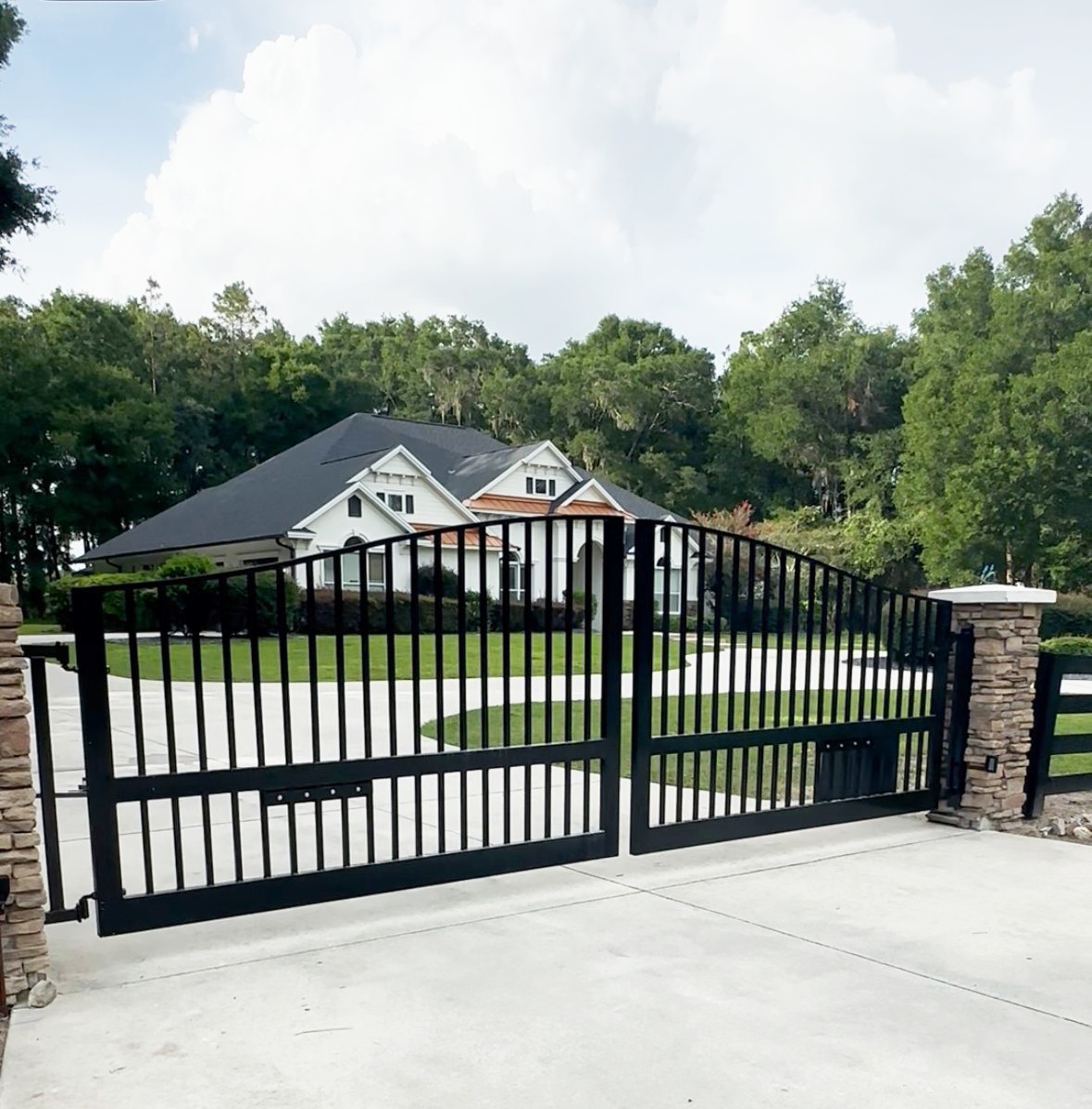
    Central Florida storms don’t ask permission before they knock out power. A gate operator power outage is one of the most common calls we get once the wind dies down, and it’s almost always preventable. Most gate operators have no idea a storm is coming and no way to keep working once the grid drops. That’s not a flaw in the equipment. It’s just how the vast majority of systems are built unless someone specifically planned around it.

    Most Gate Operators Have No Power Source of Their Own

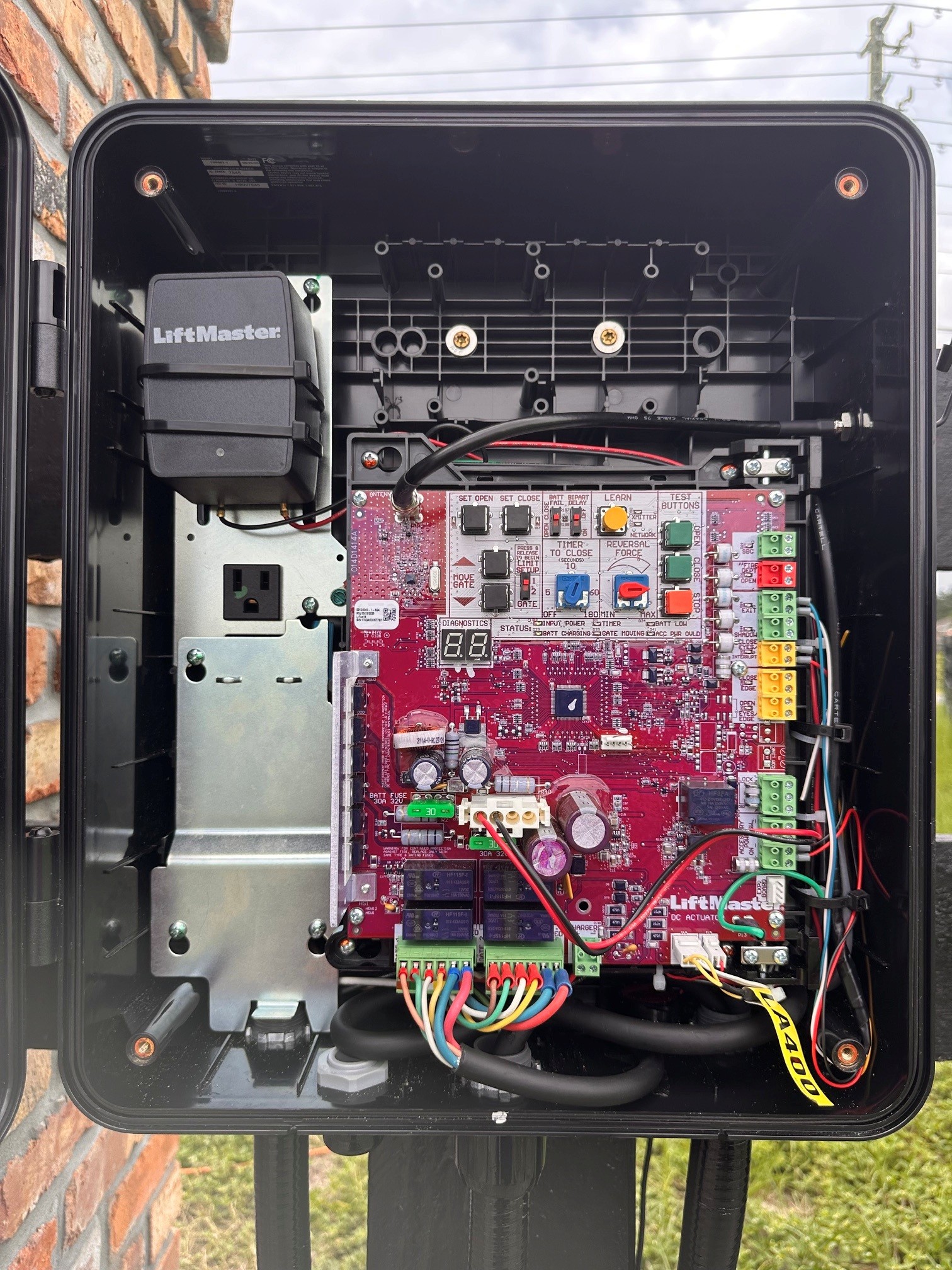
    A standard gate operator runs on regular household electricity, stepped down through a transformer to feed the motor, the control board, and the safety sensors. Cut the power at the street, and the operator goes dark with it. There’s no fuel reserve, no internal charge, nothing. The gate stops wherever it happened to be when the lights went out, open or closed, and stays there until the grid comes back or someone intervenes.

    This is the default, not the exception. Battery backup and solar charging exist precisely because the standard setup has no answer for an outage on its own. Unless backup power was specified at installation, it isn’t there.

    Lake, Marion, Sumter, and Citrus County homeowners deal with this more than most. Florida’s storm season isn’t an occasional inconvenience, it’s a recurring planning problem. A gate that won’t open during an outage means a car stuck in the driveway. A gate that won’t close means a property sitting unsecured until the power crew shows up, which during a major storm can take days.

    A Stuck Gate Has a Manual Release, and Forcing It Is a Mistake

    A gate operator power outage doesn’t have to mean a stuck gate, though. Nearly every swing and slide gate operator includes a manual release lever or key, usually right on the operator housing. It disengages the motor so the gate can be pushed or pulled by hand. Find that release before you do anything else.

    Check the breaker panel too. Sometimes the operator is fine and a tripped breaker is the entire problem, no outage required.

    What you shouldn’t do is force a gate that’s still mechanically engaged with the motor. That’s how a five-minute outage turns into a damaged gearbox and a real repair bill. Most operators use a worm-gear or screw-drive mechanism that isn’t designed to be backdriven under load, so pushing against an engaged motor doesn’t just strain the gate, it can strip the internal gearing outright. The manual release exists specifically to take that load off before you push.

    If you can’t locate the manual release, that’s a phone call, not a guessing game. Every brand handles disengagement a little differently. Some use a key-operated clutch, others a simple pull-lever under a cover plate, and a few require a specific sequence to avoid tripping a safety lockout. Walking someone through it over the phone usually takes two minutes once we know the brand.

    A Gate Operator Power Outage Has One Real Fix: Battery and Solar Backup

    A manual release gets you through one outage. It doesn’t fix anything. The actual fix is making sure the outage never reaches the gate to begin with.

    Battery backup sits between the operator and the main power feed and switches over automatically the moment the grid drops. A properly sized residential system can typically run a gate through dozens of open-and-close cycles on battery alone, which covers most Florida outages without the homeowner ever noticing a thing changed.

    Solar takes it further. A panel keeps the battery topped off continuously, so the gate runs independent of the grid entirely rather than just bridging a gap. This matters most on rural or large-acreage properties across Marion and Sumter County, where running new electrical service out to a gate can cost more than the gate itself.

    Both retrofit onto existing operators in most cases. This isn’t new-installation-only equipment. The hardware is a sealed deep-cycle battery sized to the operator’s draw, a charge controller to manage the handoff between grid, solar, and battery, and in most cases a single service visit to install it. No rewiring the property. No replacing the operator.

    One thing worth knowing before that visit: not every operator fails the same way mid-cycle. Some stop in place. Others are wired to default open or closed depending on how the safety circuit is set up. This isn’t just a convenience question, either. UL 325 requires every gate operator to have a manual means of operation during a power failure, and a backup system has to preserve the same entrapment-protection behavior as grid power, not just keep the motor running. Ask whoever installed your gate which one yours does, or have it checked at your next service call.

    Backup Power During a Gate Operator Power Outage Lasts Only as Long as the Battery Capacity Allows

    This is the question we hear most, and “it depends” is the honest answer, but it depends on specific, knowable things. A gate cycling ten times a day drains a battery faster than one used twice, since backup capacity is rated in cycles, not hours. Slide operators draw more per cycle than swing operators of similar size, simply because they’re moving more mass. And like any battery, capacity degrades with age. A backup battery installed three years ago won’t run like it did on day one, which is exactly what an annual service check is for.

    A properly sized residential battery should comfortably get a gate through a multi-day outage at normal use. Add solar, and the runway stops being a countdown at all, since the panel keeps replacing what the battery spends. That’s part of why we spec solar more often for the rural Marion and Sumter County properties that tend to wait longest for a utility crew after a major storm, where a fixed battery alone might not stretch as far as the outage does.

    Works well for: gates that cycle frequently and need a battery sized above the bare minimum, properties where a service technician can check battery health annually rather than guessing at it, and anyone who’s already had a backup battery die quietly without warning.

    Florida Specifically Adds a Storm Season That Doesn’t Care About Convenience

    Hurricane season here isn’t a once-a-year event to plan around. It’s a recurring operating condition. A gate that fails open during a mandatory evacuation is a security problem. One that fails closed when a family needs to leave is worse. Properties across our service area, from Volusia to Osceola County, run into this exact scenario every storm season, not as a rare edge case but as something that’s going to happen again.

    If you’re trying to figure out which gate type fits your property, or want the basics on what a gate operator actually does, those guides cover the ground floor. This one is about making sure whatever you pick still works when the power doesn’t.

    Works well for: homeowners who’ve already had a gate fail during an outage, rural properties without easy access to grid power, and anyone planning ahead of storm season rather than reacting to it.

    We Build Backup Power Into the Conversation, Not as an Afterthought

    When we install or service a gate operator, battery and solar backup come up as part of the initial conversation, not as an upsell after something fails. We’ll walk through what fits your property, your operator, and how often your specific area tends to lose power.

    If your gate is currently dead during outages, or you’d rather know your options before the next storm than after, reach out. We serve Lake, Marion, Sumter, Citrus, Orange, Osceola, Seminole, Volusia, and Alachua Counties.

    Call (352) 910-0013 or use our contact page to get started.


  • Which Gate Type Is Right for Your Property?

    Which Gate Type Is Right for Your Property?

    By Justin Low | Serving Lake, Marion, Sumter, Citrus, Orange, Osceola, Seminole, Volusia, and Alachua Counties

    Gate types in Central Florida matters as much as the operator running it — getting that decision right from the start saves you years of headaches. Install the wrong configuration for your site and you’ll spend the next several years fighting it — clearance problems, alignment issues, hardware failures, and gates that struggle in conditions they were never built for. This guide breaks down the main gate types, what each one actually requires, and where each one makes sense.


    Swing Gates: The Most Common Choice — and the Most Misunderstood

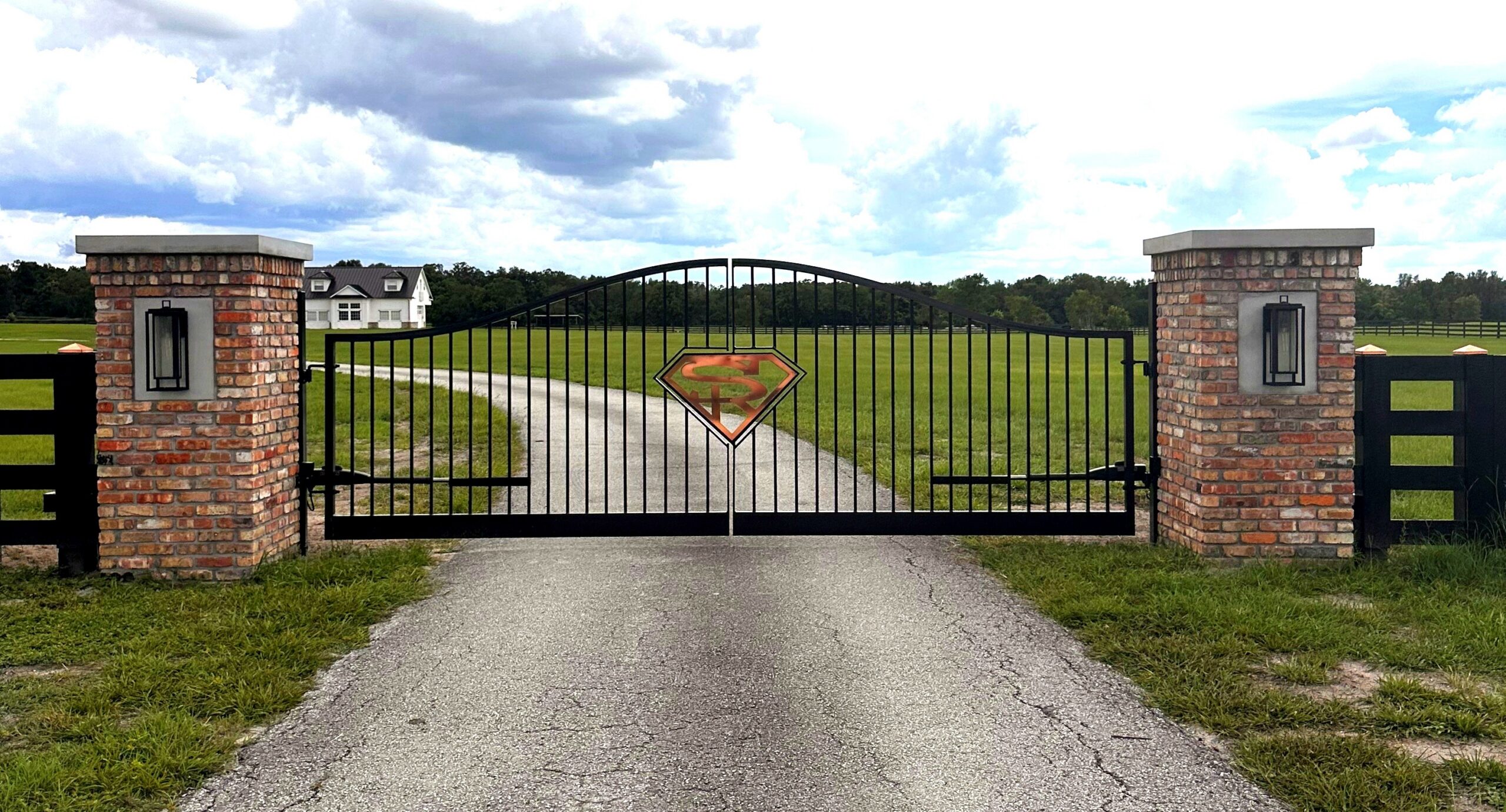
    Swing gates are what most people picture when they think of an automatic gate. One or two panels hinged at a post, opening inward or outward. They’re widely used for residential driveways and lighter commercial applications.

    What most people don’t think about before committing to a swing gate is arc clearance. Each panel needs unobstructed space to travel through its full range of motion. Inward-swinging gates need clear space on the interior side of the fence line — a slope, a landscaping feature, or a drainage ditch in the wrong place will stop the installation before it starts. Outward-swinging gates avoid that problem but require sufficient setback from the road.

    Hinge post condition is another factor that gets overlooked. A swing operator puts real torque on the hinge post. If that post isn’t properly set in concrete and sized for the gate’s weight, the whole system will drift and fail prematurely. Post condition should be evaluated before anything else.

    Swing gates work well for: residential driveways, farm entrances, estate properties with adequate arc clearance.


    Sliding Gates: The Right Call When Space Is the Constraint

    A sliding gate travels laterally along the fence line rather than swinging. Where there’s no room for arc clearance — a steep driveway, a tight entry, a property close to a road — a sliding gate is often the only workable option.

    The requirement here is track space. The gate needs a clear run along the fence equal to at least the gate’s own width, plus room for the operator and any hardware. A 14-foot gate needs roughly 14-plus feet of lateral clearance to park when open. That space has to be level, unobstructed, and stay that way.

    Sliding gates are generally more reliable in demanding-use environments. The mechanics are straightforward, duty-cycle ratings tend to be higher, and there are fewer variables than a swing gate dealing with wind load on an extended panel. For high-traffic commercial entries, a properly spec’d sliding gate is often the better long-term investment.

    One common mistake: undersizing the motor for gate weight. A heavy steel sliding gate needs an operator matched to it. Manufacturers publish weight ratings — those aren’t suggestions.

    Sliding gates work well for: sloped or constrained entries, commercial and industrial facilities, high-traffic applications.


    Cantilever Gates: Sliding Without the Ground Track

    A cantilever gate operates on the same lateral principle as a standard sliding gate but doesn’t rely on a ground track. Instead, the gate is suspended from rollers mounted on posts and cantilevered out over the opening. Nothing touches the ground.

    This matters in applications where a ground track isn’t practical — gravel or uneven surfaces, areas with heavy debris or standing water, or any site where track maintenance would be a constant problem. Cantilever designs are also easier on the hardware overall since there’s no track to fill with dirt, rocks, and Florida’s abundant organic material.

    The tradeoff is that a cantilever gate needs to be longer than the opening it covers — typically 1.5 times the opening width — to balance correctly on the rollers. That requires more fence line space than a standard slider.

    Cantilever gates work well for: agricultural properties, gravel driveways, industrial yards, anywhere ground tracks are impractical.


    Barrier Arm Gates: Access Control Over Vehicle Access

    Barrier arms — the horizontal arm that raises and lowers — aren’t designed to stop unauthorized vehicles. They’re designed to manage authorized traffic flow. Parking facilities, HOA entries, commercial loading areas, apartment communities. The barrier arm signals “stop here, identify yourself” rather than providing physical security.

    They’re fast, high-cycle, and cost-effective for applications where throughput matters. A well-spec’d barrier arm operator can handle hundreds of cycles per day. They also fail gracefully — in a power outage or malfunction, the arm can typically be raised manually without blocking traffic.

    If the goal is physical security and vehicle deterrence, a barrier arm isn’t the answer. If the goal is access management at a controlled entry point, it’s often exactly the right tool.

    Barrier arms work well for: parking facilities, HOA and apartment entries, commercial loading docks, anywhere access management is the priority over physical security.


    What Florida Specifically Adds to Every One of These Decisions

    Regardless of gate type, Central Florida’s environment introduces factors that don’t apply everywhere else.

    Humidity and salt air (particularly as you get closer to the coasts) accelerate corrosion on hardware, hinges, and operator components. Every installation should use properly rated hardware — not standard hardware that happens to be installed outdoors. Conduit selection matters. Enclosure ratings matter.

    Wind load is a real consideration, especially on wider swing gate panels. A large double-swing gate in an open area acts like a sail in a storm. That load goes directly into the hinges and the operator. Gates in exposed locations should be engineered accordingly.

    Solar-powered operators are a genuinely viable option in Florida given the sun exposure, but battery sizing needs to account for cloudy stretches and high-cycle periods. Undersized battery banks are one of the most common failure points on solar gate installations.

    None of these are reasons to avoid any particular gate type. They’re reasons to install it correctly from the start.


    The Right Gate Starts with a Site Evaluation

    The gate type that makes sense for your property depends on your specific site — topography, traffic volume, clearances, power availability, and how you intend to manage access. What works on a flat residential driveway is a different answer than what works on a commercial entrance cycling a hundred times a day.

    Smart Entry Solutions assesses every site before specifying equipment. If you’re trying to figure out what makes sense for your property, give us a call at (352) 910-0013 or submit a Request a Quote and we’ll walk through it with you.

  • What to Know Before Installing an Automatic Gate Operator in Central Florida

    What to Know Before Installing an Automatic Gate Operator in Central Florida


    By Justin Low | Serving Lake, Marion, Sumter, Citrus, Orange, Osceola, Seminole, Volusia, and Alachua Counties


    Central Florida’s Climate is Unforgiving on Gate Operator Systems.

    Central Florida’s climate is unforgiving on gate operator systems — full stop. The humidity, afternoon storms, and UV exposure accelerate wear on motors, control boards, and hardware faster than most people expect. An operator that performs fine in a drier climate will struggle here. Proper conduit, corrosion-resistant hardware, and correct motor sizing aren’t upgrades — they’re the baseline. A system installed without accounting for Florida’s environment will fail early. It’s that straightforward.

    Most property owners don’t know that many gate installers aren’t licensed electrical contractors.

    Installing a gate operator involves real electrical work. In many jurisdictions, that work requires permits — and only a licensed contractor can pull them. If an unlicensed installation causes damage or injury, insurance claims get complicated fast. Unpermitted electrical work also surfaces at closing when you sell the property. Smart Entry Solutions operates under Solar Energy Services, LLC — a State of Florida Licensed Unlimited Electrical Contractor (EC #13014930). Every installation we complete is code-compliant and properly permitted.

    Before any equipment gets selected, the site needs a proper evaluation.

    Sliding gates need clear travel room. Swing gates need arc clearance. Gate weight and width determine the right operator — getting that wrong is an expensive mistake. Power availability matters too. If service isn’t already at the gate location, you’re either running electrical to it or considering a solar-powered operator. Both are viable options, but each affects scope and cost. These are details worth knowing before you buy anything.

    Traffic volume determines duty cycle requirements — and this distinction matters.

    A residential driveway cycling ten times a day is a completely different application than a commercial entrance cycling a hundred times daily. Gate operators carry specific duty cycle ratings. A residential-grade operator on a commercial application will fail prematurely. Getting the right spec from the start costs less than replacing equipment that wasn’t matched to the job.

    The gate operator is the mechanical piece — access control is where the real value lives.

    Keypads, key fobs, vehicle loop detectors, smartphone access, video intercoms, cloud-based management for HOAs — the options are extensive. The right combination depends on your property type, your user count, and how you want to manage access long term. Plan this before installation. Retrofitting access control after the fact costs more and causes more disruption than doing it right the first time.

    Maintenance is what protects the investment.

    A gate operator runs outdoors in a demanding environment. Without regular service, even a quality installation develops problems — usually at the worst possible time. Drive component lubrication, safety edge and loop detector testing, control board inspection, hardware alignment, and battery backup testing are all part of keeping a system running reliably. Smart Entry Solutions offers Extended Maintenance Plans for residential, commercial, and industrial systems. Regular service prevents expensive emergency repairs and extends equipment life significantly.

    Whether you’re researching automatic gate operators in Central Florida for the first time or dealing with a system that’s giving you trouble, give us a call at (352) 910-0013 or head to our Request a Quote page and we’ll take it from there